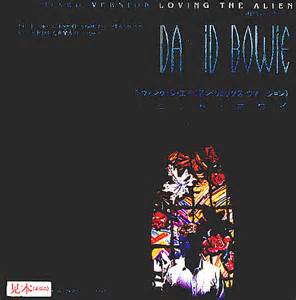
Tuesday, May 17, 2016

Screenplay Time!


Okay, about four (five?) years ago, I put "Write a screenplay" on my To-Do List. A couple of weeks ago, I finally got around to reading Blake Snyder's book on screenplay writing, Save the Cat! published in 2005. While the author's voice seems a little cartoonishly "old Hollywood," slightly misogynistic, and a tad out-of-date (i.e., "Go down to Blockbuster"), the information is still very useful.

You know how you get a great idea, set it up, start writing, then get all muddled on the way to the end? That middle part- the second act- is always so challenging for me. Well, Snyder lays out a "Beat Sheet" of 15 plot points, that can be used for the bones of any story. I don't think I'm giving anything away by showing you the list. There is much more to learn from the book.

For a 110 minute movie (Snyder tends to write Rated G & PG Family Comedies, but this length is also typical for any comedy or horror film, which I would like to write), this is the breakdown:

  1. Minute 1: Opening Image - Sets the tone for the whole movie/story
  2. Minute 5: Stated Theme - Usually said by someone to the MC, this is the theme of the movie
  3. Minute 1-10: Set-up - Establishes starting point of story and main characters
  4. Minute 12: Catalyst - the inciting incident that sets the story in motion
  5. Minute 12-25: Debate - MC waffles, debates taking action
  6. Minute 25: Break into Act II - MC starts action and story in motion
  7. Minute 30: B-Story - Subplot, Minor Characters, or Secondary story is addressed here
  8. Minute 30-55: Fun & Games - Exactly what it sounds like
  9. Minute 55: Mid-Point - This is where things change - if the setup and Act 1 was MC on the upswing, here things go wrong/downhill. If Act 1 was MC on the way down, here is the turning point for the better. In either case, it is a counterpoint to the first half of the story. It also usually involves a reference to death - a near-accident, a fall, a dead pet, even a dead house plant...
  10. Minute 55-75: Bad Guys Close In - Here is where the MC's path is blocked. The bad guys show up, create obstacles, and do harm.
  11. Minute 75: All Is Lost - Rock-bottom for MC, rug is pulled out from under, plan seems done.
  12. Minute 75-85: Dark Night of the Soul: Things just keep getting worse for the MC, they are forced to face their demons, come to an understanding or revelation, change their perception and behavior, etc.
  13. Minute 85: Break Into Act III
  14. Minute 85-110: Finale - Tying up loose ends, the payoff, etc.
  15. Minute 110: Closing Image - Counterpart to opening image, finishing touch and mood
Okay. 

So what I've been doing all week, is watching movies and breaking them down, to see if I can find all 15 points. I still find it challenging just after the Mid-Point, to really name those #10,11,12. And sometimes I'm not sure what the B-Story is, or the Mid-Point, even. But, I'm getting better. And I'm already framing my horror film idea into this structure, so I can finally envision successfully using "index cards" and a storyboard, so to speak. I feel like this homework will drastically cut down on my work load, and get me further into a finished script or story sooner than my old methods of discovery writing. (I will still use that, but for different stages of different projects.)

I've been practicing the beat breakdown on Teenage/High School Films, Comedies, and Horror Films.
Clueless
Sixteen Candles
Pretty In Pink
Mean Girls
Adventures in Babysitting
Austin Powers 2: Goldmember
Liar, Liar
Nightmare on Elm St.
Nightmare on Elm St. 2: Freddy's Revenge
Nightmare on Elm St. 3: Dream Warriors
Wes Craven's New Nightmare

I think one of the Save the Cat! sequels breaks down a bunch of films, so I plan on reading those soon, and doing some comparison work.

There are several Screenplay Competitions in the coming months, that I may look into, although I've heard for the most part that those are not necessarily the best way to spend your time and money. I want to make sure it is judged by good, productive people, and I actually receive valuable feedback on my submission. I may just skip that stuff, and go straight to pitching...We'll see, once I get the script done!

My working title is "This Little Piggy."


Monday, March 7, 2016

Reliving David Bowie's Musical Career


It has been nearly two months since the passing of David Bowie. A few hours past midnight on January 11th, 2016, I began listening to his music. All of it. I started with David Bowie, aka Space Oddity (UK & US titles, respectively) and went right through to Blackstar, which I had already been obsessing over the weekend between its release (Jan. 8th) and his death.

As a lifelong fan, I was familiar with much of his music, but not everything. I always meant to get serious about collecting his records, but he already had such a back-catalog by the time I was listening to his music...the man has 27 studio albums and 9 live albums spanning six decades. Then there's 49 compilation albums, 6 EPs, 121 singles, 3 soundtrack albums, and appearances on 68 other albums. There are also hundreds of videos, interviews, and-- just mass amounts of media. That man is the definition of prolific, even with ten year gap from 2003-2013, when he "retired" to be a stay-at-home daddy to his new daughter, Lexi, with wife, Iman.

In recent years, Bowie's discography has been remastered and re-released with bonus tracks. I chose to listen to this updated music library, in lieu of my vinyl, CD, and digital copies. I did so on Spotify- you'll be happy to know that Spotify has nearly every Bowie recording available. Since January 10th, I have listened to nothing else. I started at the beginning (1967's eponymous release) and worked my way through the years.

Historically, my favorite albums have been 70's Hunky Dory and Heroes, 80's Let's Dance and the collaborative Tin Machine, and 1997's Earthling. Of course, there are many singles along the way and in between that resonate, but as far as complete albums go, these were my go-to listening choices.


Here's what I discovered and rediscovered in the course of listening to the complete, chronological Bowie:
  • David Bowie is a master chameleon, always ahead of the world in his art.This, we knew, but hearing his work so steadily and progressively really brings that home. His early music is decidedly folk- acoustic, poetic, revolutionary. He moved on to blue-eyed soul, and nailed it. Jazzy arrangements and saxophone-laden jam sessions that never overstay their welcome. He skimmed over the disco era long enough to take the crown, with the timeless anthem of Starman. He ushered in the New Wave movement, and led the Second Wave British Invasion of music across the Atlantic. In the nineties, he explored electronica and beautifully played with industrial sound and techno soundtracks. He continued to innovate until his death, with music that is unlike anyone else's, ever.
  • There is a David Bowie for everyone.Again, nothing we didn't already know, but, really, I don't care who you are, or how conservative your taste is- there is something of his work that will speak to you.

    I know a senior man who doesn't much care for his music, but was floored by Bowie's performance in The Elephant Man. I know a millenial woman who isn't familiar at all with his music, but was weaned on his performance as Jareth, The Goblin King, in the 1986 fantasy movie Labyrinth. Some people strictly recognize him as an 80s icon, while others associate him with 1970s zeitgeist. I have other acquaintances who are most familiar with him through his collaborations with Iggy Pop, Mick Jagger, or innovators like Trent Reznor of Nine Inch Nails.

    Ziggy Stardust, The Thin White Duke, The Man Who Fell to Earth, Aladdin Sane, The Clown/Pierrot, The Goblin King, The New Waver,The Rocker,  The Outsider, The Elder Statesman, or Lazarus... I believe there is something that speaks to everyone. He is a true artist, masterfully expressing himself in music, theater, film, and paintings.
  • David Bowie has an incredible vocal range.High notes that soar. Low notes that croon. Harmonizing with himself, creating negative aural spaces that seem to open the soul. He has just as many vocal styles as he does visual personas, yet each is distinctively and undeniably David Bowie.
  • David Bowie is a musical master.He plays guitar, most notably on the early folksy-songwriter styles of the sixties and very early seventies. He plays the saxophone, the piano, and the harmonica, all live and on record. He plays percussion instruments, taught himself the cello, the viola, the stylophone, and the Japanese stringed koto. He could probably play other instruments, just for kicks. 
  • David Bowie is unflappably British.He's not just born and raised in London, England, he is consummately English. He spent years in Los Angeles (or, "Cocaine" as he calls it), then moved to Lake Geneva, Switzerland, then Berlin, Germany, where he famously overcame his cocaine addiction. He owns an Indonesian island home called Mustique, and he has most certainly traveled the world time and time again. He and his wife, Iman, set up homes in New York (Manhattan apartments and a rural home near Woodstock, NY) for the past twenty-five years, yet he has said that he always felt the outsider. Through all of that, he has held onto his traditional Englishness- preferring tea to coffee, eating lots of meat and mash (until his heart attack in 2004, after which Iman guided him to a healthier diet), and never losing his original Brixton dialect.

    Despite his outrageous visual, musical, and sexual statements, he has spent a good deal of his life behind closed doors. His family life in New York is particularly unmarked by publicity, and he is known to have enjoyed his relative anonymity and low profile a great deal. He is full of wit and humor, but also reserved and private. Typically British.
Back to my chronological listening journey...

There is so much more to his oeuvre than even I realized!

I was unfamiliar with the album Station to Station, except for the single “Golden Years.” Oh, and last year, I was shocked to hear his cover of my favorite Nina Simone song, “Wild is the Wind” on KEXP radio. How had I never known this existed? It's the last track here. I fell in love with this album…all six tracks. It is dark sound and heavy lyrics are mesmerizing, full of soaring melancholy.

Somehow, I had never gotten around to hearing two of his three "Berlin Trilogy" (Low, Heroes, Lodger). I loved Heroes, and have played it over the years, but not Low or Lodger. I had only heard a few songs from these albums when I went to see him live in concert in 2004. I remember wondering why I didn’t have these albums…Upon this Spotify listening session, I was drawn into the minimalist compositions and many of the songs. Stripped down instrumentation with laid-back guitar riffs and the kind of bouncy bass lines that speak of ease and relaxed rhythm carry this record.


Lodger opens with the whimsical “Fantastic Voyage” which rises and crests with a heartwrenchingly long note that crashes back to the shore of happy melody with lyrics about depression. My favorite kind of juxtapositional music! (This was one of those songs I first heard live, on the Reality Tour.) The second track, “African Night Flight” sounds as if it could have been recorded last month. It’s almost hard to believe he was making this music nearly forty years ago (1978-79), when it still sounds so fresh and edgy. “Yassassin” is a song I wished I had choreographed back when I was bellydancing. This album spoke so much to me that I spent six days replaying it over and over before moving on to the next album, Scary Monsters and Super Creeps.

Other albums I spent more time with were the electronic offerings of the mid-nineties, Outside and Hours. Again, there is some timeless element present, that makes these works sound like they were just produced.


Last week (the first days of March), I finished the list of studio albums. This week, I have been exploring Live at the Beeb, which was released as a 3-disc set in 2000. I am stuck on Disc One, still, 1969-1972. He’s got Tom Visconti and the band in the BBC studio, and they play psychedelic folk rock from the early albums and unrecorded tracks like “Let Me Sleep Beside”, which David explains his mother thought was “too dirty”, as well as songs to be included on the as yet unreleased Hunky Dory. The songs are interspersed with interview Q and A, and it’s truly wonderful to get a glimpse of the artist as a young man.

I have many more live recordings to go, and maybe, by the end of the year, I will be able to listen to everything without breaking into tears.


Saturday, February 13, 2016

NYC Midnight Short Story Challenge

This is my third year participating in the NYC Midnight Short Story Challenge. There are three rounds, with assignments of genre, character, and subject. In 2014, I got an Honorable Mention, but didn't make it on to Round Two. In 2015, I made it to Round Two. I was hoping for a Round Three placement this year, but I am already out!

I was excited to get the Horror genre, for the first time. But my character and subject assignments pleased me less: a paleontologist and a drug addiction. I mulled it over for the first day and night, trying not to write something too close to Jurassic Park or Jeckyll & Hyde. All my initial ideas seemed too far into the realm of science fiction, and I wanted to make sure I hit the horror notes.

I didn't push. I wrote some story bits, got some feedback, kept brainstorming, but had saved Friday and Saturday for the bulk of the rewriting. Unfortunately, a trip to the eye doctor on Friday caused me to lose many hours - I didn't realize I would be having my eyes dilated, and it took h-o-u-r-s to go back to normal. I had to spend the afternoon at the Fred Meyer's (where the optician is) waiting for sunset before I could even attempt driving! Still, I managed to get to Starbucks and pound out 1049 words, blind.

The next day, after work, I thought I had 8 hours to finish and submit, but I had forgotten to account for the time zone difference, and actually only had five hours. I pounded out nearly 5000 words, a new version of the story I had been tweaking all week, by 8:32 pm (deadline at 9pm PST). I raced through the document, slashing and burning entire scenes, aiming for that 2500 word limit. I made it down to 2499 (close!) and opened the contest webpage. There was the countdown timer, staring at me: 00:00:00... It was 9:02 pm. I had missed the deadline! I jammed over to Twitter to beg for a grace period, but to no response. I had to accept that I would not be moving on at all this year!

It was a costly lesson, but at least I have an interesting story that I can now do something else with. I will let you know when it's available to be read!


Sunday, January 24, 2016

Losing A Hero (Part II) R.I.P. David Bowie

Scientists found a new planet in our solar system. We have nine planets again. The new planet appeared after the passing of Earth's own Starman, David Bowie, leaving many us to believe that this artist has joined his place amidst the Stardust.

This is the second attempt at capturing what it means to lose this human being form our current timeline. It was written within the first few days after his death, and has not seen any revisions. I have plans to write more, but feel I need to get something out there, to join the many voices in mourning. Please let me know your reactions in the comments.

____________________________________________________

LOVING THE ALIEN (PART II)

I’ve never lived in a world without David Bowie. Until now.

“It feels like we lost something elemental, as if an entire color is gone.”*

I was not quite nine years old the first time I saw David Bowie. He performed “The Man Who Sold the World” (and two other songs) on Saturday Night Live, encased in a large plastic shell, a constructed suit with puppetry parts. Klaus Nomi and Joey Arias stood behind him, in stark stage makeup and monochromatic dresses and tights. I had never seen anything like it. These were people blurring the lines between fantasy and reality, between masculinity and femininity, between art and life. David Bowie redefined what was possible.

David Bowie inspired me to be my most creative and curious self and to live life as art.

___

I was born in the future. The year I was born was the year that Soyuz first successfully docked onto the Space Station Salyut (but unsuccessfully re-entered the Earth’s atmosphere, resulting in the first in-flight death of a human cosmonaut). It was the year that Stanley Kubrick’s film version of A Clockwork Orange was released, as well as George Lucas’s first film, THX-1138. It was also the year that DAW Books was founded, a major publisher of science fiction, which I would read much of, in the years to come. 

Fresh off the Moon Landing, NASA was the shit. Astronauts were the coolest people on the planet– because they got off the planet! The first Star Trek series, while already cancelled and off-air before I came along, was gathering a cult following in syndication. I was raised on reruns of Star Trek, along with The Jetsons, and the quirky morality tales of Rod Serling on The Twilight Zone. My mother instilled in me a love of the fantastic, a sense of endless possibility, and the power of imagination.

In early 1978, a year before I saw David Bowie on television wearing a dress and looking like an alien, my mother had taken me and my brother to see Star Wars. Space was where it was at! It was where we were headed. Flying cars, vacations on the moon, technology to make out lives easier and give us more leisure time awaited. If not in my mother’s lifetime, surely in ours, no? In the future, we would evolve powers of the mind and intellect would rule. Racism, disease, poverty, colonialism, and intolerance would all be in our past, or something we encountered on backwards little planets. 
David Bowie was from this future. He sang about Astronauts and Outer Space, Other Planets the End of the World. It was all Stardust and Style. I wasn’t entirely convinced he wasn’t an actual extraterrestrial– he seemed inhumanly thin, pale with narrow jaw, not unlike the “greys” depicted on Whitley Streiber book covers and onscreen in Close Encounters of the Third Kind. He had one blue eye and one brown** eye, a large forehead, and an incredible talent for music. He must be part-faerie, or alien, or something, to be so unlike the rest of us, I thought.

I didn’t get to listen to his music for many years. My house was full of music, but not his. There was Doo-Wop, Motown, Classic Country, and a lot of novelty music. My mom introduced me to Elvis, Simon & Garfunkel, and The Carpenters, but nothing so edgy as Bowie. My part-time older brother was into Triumph, Rush, and AC/DC, nothing so weird as Bowie. In fact, I didn’t know anyone who listened to David Bowie. Not in my extended family, not at school, not at my friend’s houses. I didn’t know about Billboard charts, modern radio, or how the music industry worked– I didn’t discover contemporary music until I was given a transistor radio at age ten. Every once in a while, there might be a mention of David Bowie on television, but it seemed rare.

This was in the late seventies, mind you. There were three television networks and PBS (which we didn’t even get) Cable TV was in its infancy, and nothing I would see in my own home for decades. There was no internet or home computers or anything to connect you to events and people outside your immediate lifestyle. It wasn’t sixth grade that I saw music videos on MTV at my new friend Karen’s house. 

The visual appeal of music videos was immediately influential. Soon, there were music videos available on NBC's Friday Night Videos. Two hours a week that I dutifully recorded with our new VCR, cutting out most of the commercials. A lot of the bands making videos were British, and I soon rediscovered Bowie. Stunning stories set to music with surreal scenes and costumes impressed me in videos for Loving the Alien, Ashes to Ashes, and China Girl. In fact, I think my affinity for Asian art and music began with Bowie, who explored and exposed us to it. 

Bowie was on the frontlines of New Wave, and the Second British Invasion. Not only was he there in the forefront, but all the young bands by his side wouldn’t have existed without his influence; bands like Duran Duran, The Human League, Culture Club, and others owed their existence to Bowie’s paving the way. 

Then came The Hunger. Holy cow, did this movie change the lives of a million teenagers in the eighties, me among them. David Bowie and Catherine Deneuve are the ultimate otherworldly power couple as charismatic, upscale vampires in New York City. The opening scene is a club, set to a song called “Bela Lugosi’s Dead” by British post-punk band Bauhaus. Can I even begin to tell you the number of ways this film affected me? 

  1. I fell in love all over again with David Bowie, this time with all the dedicated passion of a teenager instead of a fickle child. He had the most erotic speaking voice, and of course, the most perfect imperfections that make for the best physical beauty. He played the cello in The Hunger– the most gorgeous haunting pieces by Schubert and Bach. Therefore…
  2. I fell in love with the cello. I bought tapes of Bach and Schubert and Yo-yo Ma. I became aware of Bauhaus. I loved the dark, minimalistic, epic song used in the film. I immediately made my mom drive me to a record store that carried imports, so I could buy their records. They were very expensive, so I actually shared the ownership with my best friend. We split the purchases and made cassette tape copies of the albums so that we each had them to listen to.
  3. Within a decade, this band would be hailed as a pioneer of what was to become the goth subculture. Those of us who were devotees at the time referred to this style as death punk. This darker side of New Wave became Gothic Rock, and I loved it.
  4. Vampires. Long, long before the two-dimensional characters of Twilight, there was The Hunger. This cultural phenomenon was compounded by the 1985 release of Anne Rice’s novel, The Vampire LeStat, the sequel to 1976’s Interview with a Vampire. These monsters were superior creatures to mere mortals: Intelligent, immortal, sleek, and sexy.
  5. Acceptance of bisexuality and non-traditional gender roles. Bowie had already been pioneering the cultural shift in this area, but watching the very beautiful Miriam Blaylock (Deneuve) love both male and female characters resonated with me. Miriam was immortal; she had evolved beyond the limitations of a patriarchal and limited society. This made sense to me. What difference does the physical body make when it comes to love? It’s the person inside the body that matters. 

While I , myself, am mostly drawn to men, they are often androgynous or effeminate men. And I am not bothered by finding a woman attractive, either. These, too, are usually androgynous: the tough look of Joan Jett or Patti Smith. I am most attracted to the gender of Rock ‘n’ Roll!

The point is, I could accept whatever came along. I didn’t feel tethered to the same conservative rules of sexuality that had been in place for decades. David Bowie invited me to question my gender identity and sexuality, in a way that I don't think many non-hetero, cisgender people do. As a teenager, I had nearly as many friends identify as gay as straight. I felt no judgment or negative attachment to transvestites, and knew both gay and straight drag queens. (Transgender wasn’t as yet as common a concept in the mid-eighties.) 

Bowie wrote his own rules, and created a life model rarely seen: no compromises, artistic quality and authentic exploration above all. Just knowing that he was out there doing his own thing meant that any of us could do the same. I’ve not always made the best choices in my life, but they’ve been my choices. I studied art and music on my own terms. After high school, I lived in England. At twenty I picked up and moved to Seattle. I followed my instincts, talked to as many artists as I could, and lived my strange little life as artistically as I could muster.

Several years later when I met James, the man I would marry, one of the first things we found common ground on was our adoration of and attraction to David Bowie. We recognized this kindred connection that spoke to our deeper selves. Loving David Bowie was shorthand for sharing the ideals, beliefs, acceptance, and ambition of being creative, unique, and true to yourself, despite the opinions of those lesser, inferior conformists around you. Bowie fans were weird.

There didn’t used to be an internet. Sometimes, you were literally completely alone in your ideas. I sat alone in my room listening to Bowie records. I didn’t know how to find out when concerts came to town. It was an effort to get to record stores and find the records to buy. When you found a kindred spirit over an artist, you found a fast friend.

So, yeah, when Bowie came to play the Tacoma Dome with Nine Inch Nails in 1995, James and I considered canceling our wedding, set to take place the same week in Maryland. We would have scheduled around it, if we had known soon enough. Neither one of us had ever attended a Bowie concert, and it would have probably been more of a sign of our commitment than the family-attended wedding, but it wasn’t the choice we ultimately made. 

__________________________________________________________________

*Quote taken from Carrie Brownstein's Twitter
**Bowie suffered an injury in a fist fight as a youth, causing one eye's pupil to lose the ability to dilate, resulting in the appearance of two different colored eyes. In fact, both irises are blue.
__________________________________________________________________

...more to come...


Losing a Hero (Part I) - R.I.P. David Bowie

It has been exactly two weeks since the world saw the passing of David Bowie. I am tempted to write from the heart about this event and how it has affected me, but I have other pressing deadlines. Suffice it to say, I have been grieving. Some of you have not, but may be grieving for other recent losses (all to the evil cancer) such as Lemmy Kilmeister or Alan Rickman, or your own personal loved ones or heroes. 2016 is shaping up to be a painful year, so far, but I am holding out hope that great lessons will be learned and great hurts will be healed.

In the meantime, I have been listening to the entire Bowie discography in chronological order, with a few albums on repeat before moving on. I spent the first week crying, unable to sleep, unable to focus on anything but Bowie. My appetite was so diminished, I lost ten pounds or more. Random song lyrics would pop into my head, triggered by almost anything, and waves of grief would rip through my body.

Below, you will find the first thing I wrote, two hours after I received the news of his passing. It was the middle of a Sunday night (officially Monday morning of Jan. 11th). It hasn't been revised or anything...If you are a Bowie fan, you may feel the grief and shock in this piece, but if not, the lyrics may not capture my jagged emotions. I would love to know what you felt or thought.


_____________________________

Loving the Alien (Part I)


Something happened on the day he died
Spirit rose a metre and stepped aside
Somebody else took his place, and bravely cried
(I’m a blackstar, I’m a blackstar)
~ Blackstar, 2015

January 10th, 2016 was the day that David Bowie died.
Close to midnight, I started getting messages on my phone that I didn’t check. They turned out to be from friends, who realized and shared the grief I would be in, once I heard the news: David Bowie was dead.

I know something is very wrong
~ I Can’t Give Everything Away, 2015

Saturday into Sunday….I slept. I dreamt of living in a sky blue apartment with my husband, James. An old friend of ours showed up, with David Bowie. Our friend disappeared, and James and I spent the entire day with David Bowie, just hanging out, having conversations about life and music.

It’s nothing to me
It’s nothing to see
If I’ll never see the English evergreens I’m running to
~ Dollar Days, 2015

The day before was Friday, January 8th. For years, I have celebrated January 8th as a sort of musical matsuri, since it is the birthday of both Elvis Presley and David Bowie, i.e. the gods of rock’n’roll. I had spent that evening after work sitting at Starbucks, writing and listening to Blackstar on repeat. Blackstar is the 26th and newest studio album release by David Bowie. It had been released that day, January 8th, 2016. I hadn’t even received the actual CD or record that I’d ordered, yet.

Saying more and feeling less
Saying no but meaning yes
This is all I ever meant
That’s the message that I sent
~ I Can’t Give Everything Away, 2015

When I was little, I was very impressed by Bowie’s musical performance on Saturday Night Live. It was The Man Who Sold the World, with Klaus Nomi and Joey Arias on backing vocals. They wore giant, avante garde jumpsuits and seemed to be acting the part of aliens from outer space. I was hooked. It introduced and turned me onto experimental music, avante garde performance art, glam rock, androgyny, and Bowie, himself. He was so interesting. And different. And alien.

He trod on sacred ground, he cried loud into the crowd
~ Blackstar, 2015

New Year’s Day 2016 was spent with James and a friend, watching Bowie videos, both new and old. I watched the video for Blackstar (the title track) again, later, three times in a row.
My first year of middle school, I began playing with makeup. I had always been a tomboy, and wearing makeup was less a move towards femininity than an artistic statement. I looked to it as a form of self-expression, and just needed to play around with who it was I was expressing. I remember replicating Bowie’s Aladdin Sane red and blue streak down my face. David Bowie continued to be an inspiration for my punk glam teenage makeup choices.

And your prayers they break the sky in two
(Believing the strangest things, loving the alien)
~ Loving the Alien, 1984

In 2004, I was lucky enough to have been invited to see him live in concert at The Paramount in Seattle. James tried to tell me I shouldn’t go, if he couldn’t go, especially since it was just days before his own birthday. But, my birthday is three days after James’s, and there was no way I was going to turn down the invitation. He didn’t speak to me for a few days over it, but I was elated. In addition to my favorite hits, Heroes, Ashes to Ashes, and Ziggy Stardust, Bowie played my two favorite lesser-known songs, Life On Mars and Five Years! I couldn’t have asked for a better set list.
Three months later in April, the tour returned to Seattle, this time at the larger Key Arena. I bought tickets for James and myself. Floor seats were pretty damn good. The set list was close to the previous show I had seen, but without those two beloved songs of mine. It was like that performance was just for me and I was meant to be there. And then, I could share it with my husband.

We could steal time, just for one day
We can be heroes, for ever and everything
What d’you say?
~ Heroes, 1977

Nine years earlier, in 1995, James and I prepared to fly back to my hometown in Maryland for our wedding, at the end of October. It was announced that David Bowie and Nine Inch Nails were on tour, and would be playing near us while we were away. We nearly cancelled the wedding.

And I want to believe
In the madness that calls ‘Now’
And I want to believe
That a light’s shining through
Somehow 
~ Cygnet Committee, 1969

I was reading in the bathtub earlier tonight, which is one of my favorite things to do. At 1AM, I put down the book and picked up my phone. I had several messages from friends expressing their condolences to me. I was baffled, but concerned. It didn’t take long to see the news. David Bowie, who had just turned 69 days before, died peacefully in his home surrounded by loved ones after a long battle with cancer.

Look up here, I’m in heaven
I’ve got scars that can’t be seen
I’ve got drama, can’t be stolen
Everybody knows me now
~ Lazarus

I cried so hard, sitting in the bathtub, that one of my cats began to paw at the shower curtain in concern. An hour later, I was still sitting there, crying, water drained. James came in and asked what I was doing. I found it difficult to say the words.
“I knew it!” he cried. “I fucking knew it! I had that feeling.” Which just made me cry harder.
“I’d just had that dream…” I reminded him. Of us, hanging out with Bowie, in a sky blue apartment.
“I’m sorry,” he said to me.
I got out of the tub and sat down to write this. I listen to Blackstar, the entire album full of lyrics that have new meaning in light of his sickness, his knowing, his passing. I cry, over and over again.

Oh, I’ll be free
Just like that bluebird
Oh, I’ll be free
Ain’t that just like me?
~ Lazarus
______________________ ~ fin ~ _____________________

Wednesday, December 16, 2015

Winter's Update

Hello! I haven't blogged in months - sorry. I also haven't been "productive" - been more of a "conductive" state/stage. I have been reading a ton - books for research on my 1920s novel, memoirs to pick apart, books on writing and story structure... you can find the list on my Goodreads.  I feel like I am working on foundations and fine-tuning my skills at story building. Hopefully, this will lead to better work in the coming year.

OH, ALSO, HAPPY HOLIDAY SEASON TO EVERYONE!


It's been a nice season for me, so far. Nothing crazy, no major drama. Just nice music, fun shopping, easy relations, and lots of cozy downtime between work and stuff. Hope you are all having equally excellent days!

Did I mention that I recently discovered that my grandfather and his brother were teenage bootleggers in Baltimore during Prohibition? Yeah, so that is totally steering my twenties novel to my hometown, which I am very excited about. Still very much in development and research stages, but I am enjoying the process immensely.

I just finished reading a great ghost story, btw. It's called Salvage, by Duncan Ralston. I was impressed by the writer's skill at building suspense and I had no idea what resolutions we would ever reach. I look forward to creating such a suspenseful ghost story (long form) myself.


I am taking two weeks off from my Monday night writer's group. We will convene again in January. I will be celebrating the holidays and perhaps rejuvenating myself in the meantime.

I hope you are all reading good books and writing what you love!

Merry Christmas! Happy Yule! Happy Hannukah! Happy Winter Solstice!

Tuesday, September 1, 2015

PNWA Summer Conference 2015 Report


It's been over a month since the Writer's Conference here in Seattle, and I haven't posted about it, yet. I think it just goes along with my weird year of not being able to do much more than sleep. Sorry!

This was my third consecutive year, and it was full of fun and learning, as usual. It's interesting to see how my experience at the conference has morphed over the past three years:

  • 2013 - My first year, not knowing what to expect, was a bit overwhelming. I held up throughout the four days, but Saturday was definitely my high - the day I pitched agents and garnered the nickname of "The Zombie Lady" was busy, busy, busy. I crashed hard that night, barely able to drag myself to the Sunday brunch speech, but managed.

    I met a lot of interesting writers, agents, and editors. I focused on pitching more than learning, and only took a few workshops/forums on indie publishing, and writing craft.
  • 2014 - Year Two, I was immediately greeted Thursday morning by some writers that I had met the previous year. The next four days were spent running into writers I had met before, a few of which I had stayed in touch with, and some writers I knew from outside PNWA; and meeting a lot of new people. I pitched the same book, but knew I had to make revisions before it was publishable. I took a few more classes on writing craft, which was helpful.

    This year had a lot of bar meetings - most nights post-conference were spent in the hotel bar, with writers and agents. Made for some interesting moments, but I am not drawn to drama.
  • 2015 - The pace felt less hectic, this year. It could be chalked up to the fact that I slept in most days - arriving early on Thursday, but showing up between 9:30 and 11:30 the other days. I looked specifically for craft classes to take. I pitched two sessions on Friday, early in the con, and connected with a lot of writers. It seems I have collected quite a number of acquaintances in just three years, and am glad but surprised to be remembered by so many. 
THURSDAY
The keynote speaker Thursday night was Andre Dubus III. I heard some attendees were disappointed with his speech, but I was shocked to hear that. I think those people expected more of a class lecture? I have no idea. I enjoyed it. Andre was genuine, sharing his own story of how he went from being a Boston bar bruiser to a successful author. I think, anytime someone shares their story, it gives the listener/reader a chance to identify those traits and qualities in themselves, and find a guidepost for what to do or what not to do, depending on the story. It is a way to connect with the creative drive within each of us. It is a way to look at the process, and what is shared and what is different from writer to writer.

Earlier in the day, I decided to check out the panel, "How To Get the Most Out of Your PNWA Conference." It was mostly attended by first-timers, but there were a few, like me, that had been to the con before. I was pleased to see Steve Jaquith sitting on the panel - it was his group, the Seattle Scribblers, hosting this panel. He waved to me as I took a seat in the front row, and after beginning his address to the room, pointed me out as someone he remembered from the past cons, even recalling the name of my novel! I enjoyed the panel, and met a very nice writer at the end, with whom I ended up lunching with a few times over the weekend. I think it is good to have this panel - the four day event can be so overwhelming! It is best to plan early - before you get there, you should know which agents and editors work in your genre and who you want to meet with. Then go through the program to choose classes and panels. And talk to everyone!

I attended Scott Driscoll's "Character, Value, and Change" class. He is an established creative writing professor and author, but I must admit that his style is a bit dry for my taste. I had trouble staying awake - more on me than him, I am not usually awake so early - and couldn't relate the literature examples he used. But that's okay... we all have different ways of writing and reading, right? This would be great for anyone looking to finesse their literary skills. Scott is very nice, and even though he forgot his handouts, he promised to have them the following day for us, which he did.

At 3:30 pm, the only thing to do was go listen to Robert Dugoni speak, which I would have done anyway, because he's an excellent speaker. (I really need to read those books of his I bought, despite not being a crime fiction/thriller fan...I'm sure they're great.) "The Writer's Connection" was a revamp of his Sunday Brunch Speech from the previous year, but that didn't bother me one bit. His stories are entertaining, informative, applicable, and inspiring. Plus, his mom was in the audience this year, so that was fun.
Robert Dugoni
Literally, the only photo I took all conference.

It was chatting and networking until the dessert reception with Andre Dubus III. I have to admit, I have yet to read any of his work...I was first introduced to him by Bill Kenower, in a three-part memoir class I took in 2014. Dubus's Townie was a recommended read. After hearing him speak, I purchased a copy of Townie, and stood at the end of the line to have him sign it. After signing the books of perhaps 80 people, he was still fully engaged, which was refreshing. 

"Enough about me," he said to me. "What do you write?" Taken aback, I explained my strange brew of memoir and horror and other fiction and non-fiction styles. He listened, and was sincere in his wishes for my success, and stood to give me a full hug. (Not creepy.)

FRIDAY
After sleeping in and missing the Editor Forum, I made it in plenty of time for the Agent Panel. These Friday AM panels are where each agent and editor introduces him or herself to the crowd, and answers questions. It is the place to learn more about what each person is actually looking for, and whether or not it is worth your time to pitch to them. This is where you can tweak your pitch-list, adding in some you hadn't considered and prioritizing those you plan on meeting.

The rest of my day was spent pitching. The 2-3:30 block and the 4-5:30 block. I pitched both my horror novel, How I Spent My Zombie Apocalypse, which is STILL in need of revisions, and my emerging memoir, which I hastily titled "Unfamiliar Places" that morning. I sat in several pitch practice rounds the night before and that morning to work on the memoir pitch. It went as well as can be expected - memoir is a flooded market, and I am not a platform-ready name. I hardly know what the hell my memoir will end up looking like, but I figured I might as well get some ideas. Rita Rosenkrantz was as nice and helpful as ever (I spoke with her in 2014 about how to do memoir) and suggested I attend her 4pm class, "How to Write an Irresistible Nonfiction Book Proposal." Since my second pitch block list was was full, at 4:55 pm, I decided to go to her class rather than stand in line to possibly get one more pitch in.

Rita knows her business, and is more than willing to answer any and all questions regarding nonfiction books, memoir writing and publishing, platform building, and author-agent-editor relationships. As usual in this process, I left feeling informed, encouraged, and discouraged at the same time. But more on that the next day.

Friday night dinner happens in the hall with an author panel headed up by the always entertaining Robert Dugoni. It is an informal group interview/conversation on the writerly life, which I believe is the format every year for the Friday night event. It is enjoyable, once again, despite the authors being unknown to me:
  • Nancy Kress - Science Fiction since 1976 (why have I not read her?? Must check her books out)
  • Elizabeth Boyle - Romance (not my genre of choice)
  • J.A. Jance - Mystery and Horror ( I missed this part). Famous for SPD Det. J.P. Beaumont series, set in Seattle. I bought one, and she talked me into buying another - "Second Watch" to read first. I have read Second Watch, and it is not the kind of thing I usually read, but was very good!
  • Kevin O'Brien - Thriller writer. Funny guy, might have to check his books out, too. Couldn't afford all the books!
SATURDAY
Now, this is usually the Big Day, with all the attendees present, and the awards ceremony dinner at the end of the day. But, I'd already pitched the day before. I didn't enter the contests this year, but was rooting for several friends. And, I didn't feel the need to do the First Page forum again, since I am so not ready-to-go with new work. 

I slipped into "The Five Essential Elements of a Short Story" class with Bharti Kirchner, whom I believe was a first time PNWA presenter, although she does this for a living and has taught at many conferences around the country (world?). She was a very good presenter - clear on her work, her presentation, and meeting the class goals. At the same time, she went with the flow, and answered questions that came up with ease, allowing for a very organic structure. 

Nest, I chose to attend Jason Black's "EDITING: Revision: Top Seven Manuscript Pitfalls." Okay, this is good for those with grammar struggles, but not so much me. I was hoping for more of a developmental revision list of pitfalls - story structure, plot holes, character arcs, etc. but instead, we covered a lot of sentence work, vocabulary within style and tone, and other useful tips. Not for me, but good.

Actually, in the middle of this, I stepped out to meet for a pop-up coaching session with Bill Kenower. It was a last minute add-on, when he realized he had time to kill for Saturday afternoon. He opened up half a dozen or so twenty-minute appointment spots, and I happened across the sign-up line the day before. I spoke with him about the whole author platform for rmemoir and non-fiction, and his advice contradicted Rita Rosenkrantz's but felt more authentic to me. 

"Rita is an intellectual. She is smart, but doesn't necessarily understand the creative mind. You and I are creative, and the idea of planning and business isn't where we excel. Where Rita might focus on building the name and platform first, I would focus on the writing." [paraphrased] 

"So would I," I respond. "That's more me."

Bill went on to explain, "I can't tell you what my platform is. I can't tell you what my brand is. Other people can tell you; they can tell you who I am as a name, an author, a brand, but I can't. I just write." [paraphrased]

I get that. Just write, and put it out there, and let others figure out who you are. Even though I write creepy ghost stories, funny campy horror stories, cultural essays, personal essays, memoir, travel, sci-fi... they are all united by ME. My style, my voice, my experiences, my color. My brand is who I am, and what I write is what I do. I can work with this. I am pleased with my twenty minute session. I feel less confused and discouraged, and more authentic to my own self.

I am stymied at 4pm, because there are so many good classes available, I narrow it down to Waverly Fitzgerald's "Deep Revision" and A.C. Fuller's "The Five Stages of Editing." I took a class from Waverly years ago at the library, and remember her being a studious, capable writer and instructor. I look for her, but she is not yet in her presentation room. I walk down the hall to speak with A.C. Fuller, who is a first time presenter, He is pleasant and helpful, describing his class as more of what-to-do-in-what-order and less of how-to-do-it. I thank him for his advice and head out to find Waverly. I run into a few other writers I know with the same dilemma. Some are going to take notes in A.C.'s class, so I go to Waverly's.

It is exactly what I wanted: deep revision - how to identify story problems, how to work with beta readers, how to assess and address your novel (or other work) as a whole. I get several good tips and take a number of notes. There are writing exercises and discussions. Very helpful!

I later hear that A.C.'s class was also fun and helpful. He has emailed notes to all, and I request to get a copy, which I did. 

Saturday's dinner reception and awards ceremony seemed to drag on too long, as each recipient is allowed to make speeches (what?) and most do. There is some trouble with the microphone, and overall, I am ready to get home. I stick around long enough to hear all the winners, but admit to reverting to my East Coast nature at the table, and making too may snarky and sarcastic comments. No insult intended... just having that kind of night. 

I peruse the bar, chat with a few friends, and head home.

SUNDAY
I arrive just a few minutes before Bill Kenower takes the stage.

He gives a great speech, with lots of useful advice and several exercises for us to do, both while in the room, and on our own.

I will include the notes I took from this speech, below, in the comments section.
(If anyone wants notes from other events, let me know.)

A small group of writers has a long-standing tradition of a post-conference brunch/lunch after the Sunday speech, over at 13 Coins. I was invited to join them my first year, and have looked forward to it, ever since. It's great to have time to chat with other attendees afterwards, with no one in a rush to go pitch or join a workshop, or just hear each other over the crowded hallway traffic. We talk about the classes and events we attended, what we thought about them, what we liked or didn't like, what we learned, and throw ideas and stories around casually. Very good, even if we ended up with two conversations going simultaneously- one at each end of the long table...

If you go to PNWA next year, join the 13 Coins post-brunch!